

Call Us : (225) 398-8812

- Home > Blog > Sedation Dentistry > How Sedation Dentistry Can Help You Relax During Your Appointment
 By Elementsdentalspa
  Apr 21, 2026
Sedation dentistry uses medication—including nitrous oxide, oral pills, or IVs—to induce a state of deep relaxation and calm during dental procedures, effectively reducing anxiety, pain, and, in many cases, eliminating memory of the appointment. It enables patients with dental phobias or sensitive gag reflexes to receive necessary care comfortably and efficiently.
Dental anxiety and dental phobia are two of the most common reasons people delay routine oral health care. A 2025 study published in the Journal of the American Dental Association (JADA) found that nearly 73% of U.S. adults feel afraid of going to the dentist, with about 27% reporting severe fear. That tension builds over years and often leads to skipped cleanings, postponed treatment, and larger oral health problems down the line.
At Elements Dental Spa & Aesthetics in Baton Rouge, LA, we understand that walking into a dental office can feel stressful. That is why we offer sedation dentistry for patients who want a calmer, more comfortable experience. If fear has kept you from getting the care you need, contact us today to plan a visit that feels easy from start to finish.
What Does Sedation Dentistry Actually Do for Anxious Patients?
Most sedation options used in general dentistry fall under minimal to moderate conscious sedation. You stay awake, able to breathe on your own, and able to answer questions from your dentist. The sensations that usually trigger anxiety, like the sound of the drill or the pressure of instruments, fade into the background.
The goal is not to knock you out. It is to help your mind and body stop fighting the experience so your dentist can work efficiently and you leave without feeling drained.
How Sedation Changes the Physical Stress Response
Dental anxiety is not just emotional. It triggers a real physical reaction through the sympathetic nervous system, including faster heart rate, shallow breathing, and tense muscles. Sedation medications calm the nervous system, which softens those physical signals. Most patients describe the feeling as pleasantly drowsy, warm, or simply uninterested in what is happening around them.
Why Patients Feel Safer Under Sedation
Sedation protocols in a dental office are monitored the entire time. Your vital signs, including blood pressure, heart rate, and oxygen saturation via pulse oximetry, are tracked throughout the procedure, and medication levels are adjusted as needed. That oversight is one reason many nervous patients feel safer under sedation than without it.
What Are the Different Types of Sedation Offered?
Choosing the right option depends on your anxiety level, medical history, appointment length, and how quickly you want to return to normal activities.
Nitrous Oxide
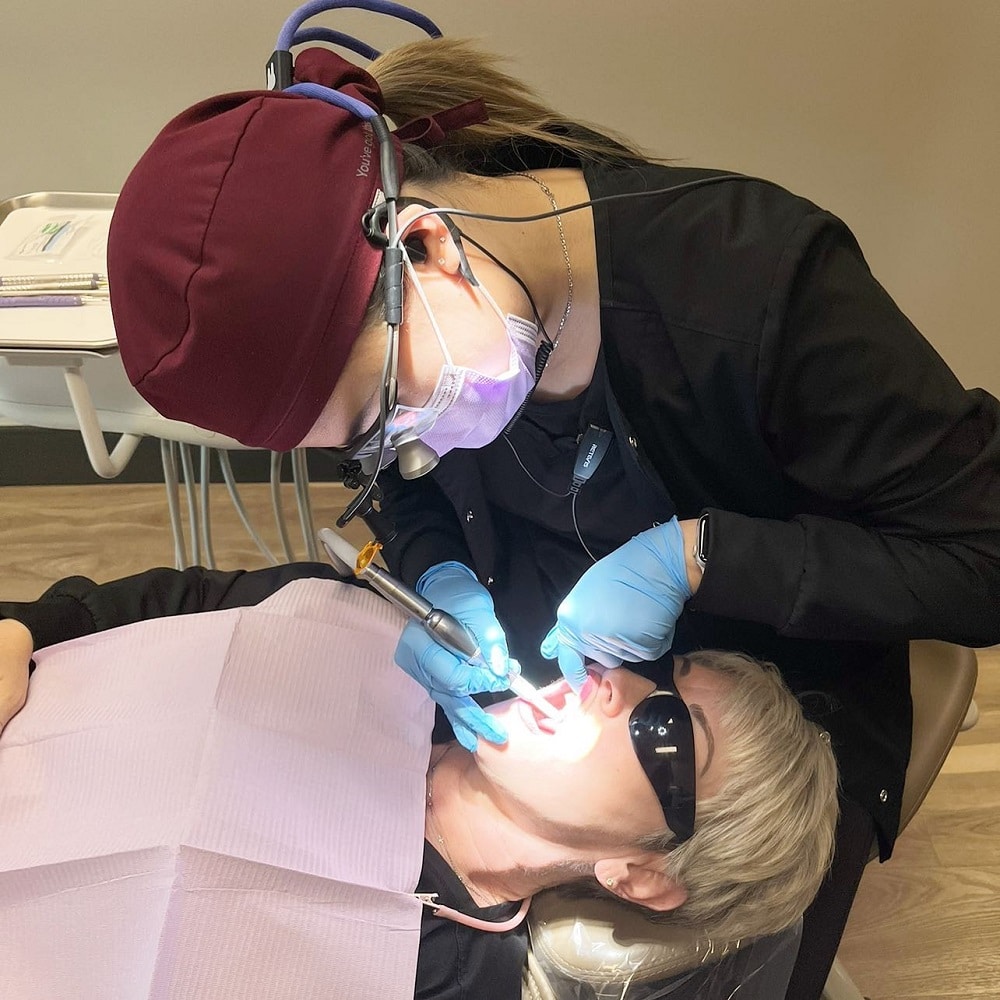 Nitrous oxide, often called laughing gas, is inhaled through a small mask placed over the nose. It works within a few minutes, produces a light floaty feeling, and wears off almost as quickly as it takes effect. Most patients are able to drive themselves home and return to work or school the same day.
Oral Sedation
Oral sedation uses a prescribed benzodiazepine such as triazolam or diazepam, taken before your appointment. It produces deeper relaxation than nitrous oxide, and many patients have only fuzzy memories of the visit afterward. Because the effects last several hours, you will need a trusted adult to drive you home.
IV Sedation
IV sedation delivers medication, typically midazolam, directly through a vein for the deepest and most precise level of relaxation. It is typically reserved for patients with severe anxiety or those undergoing more complex procedures. Your dentist can adjust the sedation level in real time, which is why IV sedation is often preferred for longer surgical appointments.
Who Is a Good Candidate for Sedation Dentistry?
The best way to know if sedation is right for you is a short consultation. Your dentist will review your medical history, current medications, and what kind of procedure you are scheduled for before recommending an option.
What Happens Before, During, and After a Sedation Appointment?
Knowing what to expect at each stage removes a lot of the uncertainty that drives anxiety in the first place. Most patients say the preparation call alone helps them feel more in control.
Pre-Appointment Preparation
 You will be asked about your health history, allergies, and current medications. Depending on the sedation type, you may be told to avoid eating for a few hours beforehand, wear comfortable clothes, and arrange a ride home. Oral and IV sedation both require a designated driver.
During the Procedure
Once the medication takes effect, your dentist begins treatment. You stay awake and responsive, but the time passes much faster than it would without sedation. Your breathing, heart rate, and oxygen level are monitored the entire time per ADA and American Society of Anesthesiologists guidelines.
Recovery After Your Visit
For nitrous oxide, recovery takes just a few minutes and most patients return to normal activities the same day. For oral or IV sedation, plan to rest at home for the remainder of the day. You will feel sleepy for several hours, and your memory of the procedure may be hazy, which many patients consider a welcome side effect.
Feel Calmer About Your Next Dental Visit
Avoiding the dentist rarely solves the problem. Small issues turn into bigger ones, and the anxiety that kept you away grows every time another appointment gets pushed off. Sedation dentistry is one of the most effective ways to break that cycle.
Our team offers sedation options alongside a full range of dental services in Baton Rouge, from routine cleanings and cosmetic dentistry to emergency dentistry visits.
Ready to book your next appointment without the dread? Reach out to our Baton Rouge team to schedule a consultation or learn which sedation option fits your needs.
Medical Disclaimer: This blog post is for educational purposes only and is not a substitute for professional dental advice. Sedation dentistry carries risks, and suitability varies by individual, so consult a qualified dentist before treatment. Elements Dental Spa & Aesthetics does not guarantee specific results.
Frequently Asked Questions
Yes. Sedation dentistry is considered safe when administered by a trained dental team following ADA safety guidelines and monitoring your vital signs throughout the procedure. The medications used for nitrous oxide, oral sedation, and IV sedation are FDA-regulated and dosed based on your medical history and weight.
No, most sedation dentistry uses conscious sedation, meaning you stay awake and responsive but feel deeply relaxed. You can answer questions from your dentist and breathe on your own. General anesthesia, which renders patients fully unconscious, is a separate and deeper level of sedation typically administered by oral surgeons or dentist anesthesiologists for complex surgical procedures.
You can drive yourself home after nitrous oxide because the effects wear off within minutes. Oral sedation and IV sedation both require a trusted adult to drive you home because the medications continue to work for several hours after the appointment ends.
Nitrous oxide wears off within 5 to 10 minutes after the mask is removed. The effects of oral sedation typically last 2 to 6 hours depending on the medication used. IV sedation peak effects wear off within 1 to 2 hours, but grogginess can linger for the rest of the day, and full recovery may take up to 24 hours depending on the dose used.
Coverage varies by plan and type of sedation. Nitrous oxide is sometimes covered as part of routine care, especially for children or anxious patients with documented need. Oral and IV sedation are more often covered when paired with specific procedures like surgery or deep cleanings. Your dental office can verify coverage before your appointment.
Yes, certain sedation options are approved for pediatric patients when needed. Nitrous oxide is the most common choice for children because it is mild and wears off quickly. Oral sedation may also be used in specific cases, and pediatric dentists follow strict dosing guidelines based on the child’s age and weight.
Your dentist will recommend the right option after reviewing your medical history, current medications, anxiety level, and the length of the procedure. A short consultation before the appointment is usually enough to match you with the sedation method that fits your needs best.
Memory of the procedure depends on the sedation type. Patients who use nitrous oxide usually remember the full appointment clearly. Oral and IV sedation often produce partial or complete amnesia of the treatment itself, which many patients with severe dental anxiety welcome as a benefit rather than a drawback.

